Share
2 March 2026
Japanese Garden Design Ideas: Simple Steps to Create Your Own Zen Retreat
Japanese garden design has long been admired for its calming simplicity, timeless beauty, and deep connection to nature. Whether you have a sprawling lawn or a compact courtyard, incorporating Japanese garden ideas can transform your outdoor space into a peaceful sanctuary. In this guide, we explore modern Japanese garden ideas, traditional principles, and practical ways to create your own Zen retreat in the UK.
Key Principles of Japanese Garden Design
At the heart of every Japanese garden lies a philosophy rooted in harmony, balance, and simplicity. Rather than filling a space, the goal is to create meaning through careful placement and restraint.
The key principles include:
- Asymmetry: Avoid rigid layouts and embrace natural, organic arrangements
- Balance: Use elements like stone, water, and plants in harmony
- Simplicity: Minimalist Japanese garden designs focus on fewer, high-quality features
- Naturalness: Materials and layouts should reflect nature, not overpower it
- Symbolism: Every element represents something deeper, such as mountains, rivers, or islands. These principles guide everything from layout to material selection.

Traditional Japanese Garden Elements
Traditional Japanese garden elements are timeless and can be adapted for both classic and contemporary spaces. Key features often include:
- Stones: Represent mountains or islands and form the backbone of the design
- Water: Symbolises life and movement, often used in ponds or streams
- Gravel or sand: Raked to mimic flowing water in Zen gardens
- Bridges and pathways: Encourage mindful movement through the space
- Plants: Carefully chosen for texture, shape, and seasonal interest
Incorporating stones in Japanese gardens is particularly important, as they anchor the design and create structure. Explore our natural stone paving range to find the perfect materials for your garden.
Japanese Garden Path Ideas
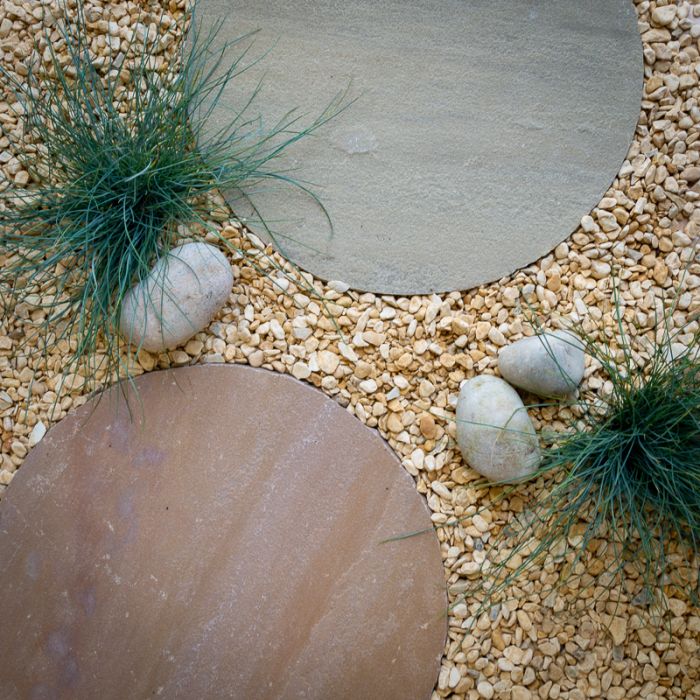
Pathways are essential in guiding movement and shaping the experience of your garden. Japanese garden path ideas often focus on slowing the pace and encouraging reflection.
Consider:
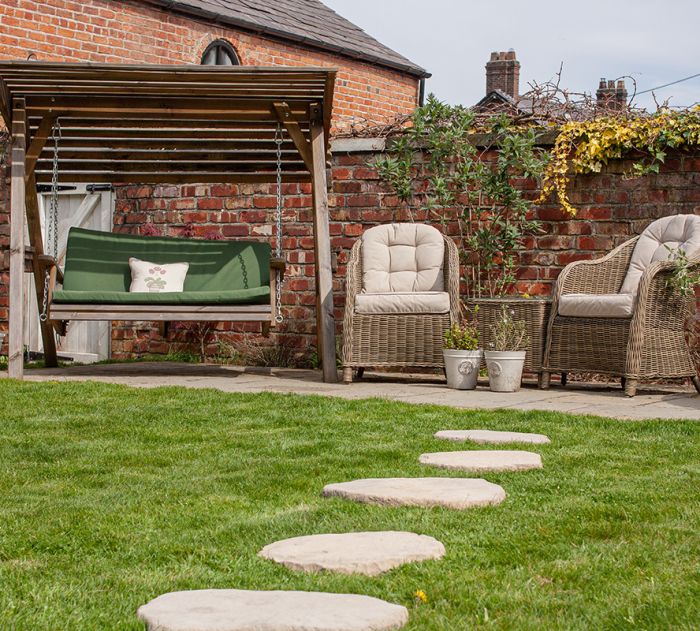
- Stepping stone paths with irregular spacing
- Natural stone paving that blends with the surroundings
- Gravel paths edged with larger stones or moss
- Curved routes rather than straight lines
Using high-quality natural stone paving or porcelain can elevate the look while maintaining authenticity.
Japanese Garden Water Features
Water plays a calming and symbolic role in Japanese gardens. Even in smaller spaces, Japanese garden water features can be incorporated effectively.
Options include:
- Small ponds with koi or aquatic plants
- Bamboo water spouts (shishi-odoshi)
- Stone basins for a minimalist aesthetic
- Recirculating water features for low maintenance
If space is limited, even a simple water bowl can create a tranquil focal point.
Japanese Small Garden Ideas
You do not need a large space to achieve a Zen-inspired design. Japanese small garden ideas focus on simplicity and careful composition.
Try:
- A single statement tree or shrub
- Gravel with raked patterns to mimic water
- Compact stone arrangements
- Vertical planting to maximise space
- Minimal furniture to maintain openness
Small gardens benefit greatly from a “less is more” approach.
Modern Japanese Garden Ideas
Modern Japanese garden ideas blend traditional principles with contemporary materials and layouts. This style is particularly suited to UK homes seeking a clean, architectural finish.
Examples include:
- Porcelain paving with a natural stone look
- Sleek water features with geometric shapes
- Minimal planting palettes
- Integrated lighting for evening ambience
- Defined zones for relaxation and entertaining
The result is a space that feels both modern and deeply calming.
How to Layout a Japanese Garden
When planning your layout, start with a focal point and build around it. This could be a feature stone, a water element, or a tree.
Steps to follow:
- Define the purpose of the space (meditation, entertaining, visual appeal)
- Choose a focal feature
- Create garden pathways to guide movement
- Add layers with plants, stones, and textures
- Maintain open space to avoid clutter
Avoid symmetry and allow the garden to feel organic and evolving.
Creating a Japanese Garden in the UK
The UK climate is well-suited to many Japanese garden styles. When designing your space:
- Choose hardy plants like Japanese maple, bamboo, ferns, and moss
- Use durable stone materials that withstand rain and frost
- Incorporate drainage-friendly gravel areas
- Position elements to work with natural light and shade
Locally sourced stone can help achieve an authentic look while ensuring longevity.
What Plants Go Into a Japanese Garden?
Plant selection is key to achieving the right aesthetic. Popular choices include:
- Japanese maple (Acer palmatum)
- Bamboo
- Moss and ferns
- Azaleas and rhododendrons
- Evergreen shrubs for year-round structure
Focus on texture, colour variation, and seasonal change rather than dense planting.
Japanese Garden vs Zen Garden
While often used interchangeably, there is a distinction.
- Japanese gardens: Broader in style, incorporating water, plants, and structures
- Zen gardens: A minimalist subset, often using gravel, rocks, and very limited planting
Zen gardens are ideal for small spaces or those seeking a more meditative environment.
How to Create a Japanese Garden on a Budget
Creating a Japanese garden does not have to be expensive. You can achieve a beautiful result by focusing on key elements.
- Use gravel instead of large paving slabs
- Repurpose existing stones or materials
- Start with one focal feature and build gradually
- Choose a limited plant palette
- DIY features like simple water bowls or stepping stones
The emphasis on simplicity makes this style naturally cost-effective.

What Are the Five Basic Rules in the Design of a Japanese Garden?
The five core rules are:
- Keep it simple
- Embrace asymmetry
- Use natural materials
- Create balance and harmony
- Design with meaning and intention
What Are the Four Elements of a Japanese Garden?
The four essential elements are:
- Stone
- Water
- Plants
- Ornaments (such as lanterns or bridges)
Each element should work together to create a unified, tranquil space.
What Is the Key to a Good Japanese Garden?
The key lies in restraint and thoughtful placement. Every element should have a purpose, and nothing should feel excessive. By combining traditional Japanese garden elements with modern design approaches, you can create a timeless outdoor retreat that promotes relaxation and mindfulness.
Explore our full range of Japanese garden stone products to bring your vision to life. Whether you are exploring minimalist Japanese garden designs or looking for practical Japanese small garden ideas, the beauty of this style is its adaptability. With the right materials and a clear vision, your garden can become a peaceful escape inspired by nature.