Share
28 October 2025
Our Top Tips to Create Curved Garden Edging in Your Garden
Garden and lawn edging might seem like a small detail, but it plays a massive role in defining your outdoor space, bringing a neat finish to borders, pathways, and flowerbeds. While straight edging offers a clean, structured look, how to make curved garden edging is a question many keen gardeners ponder when they envision a more organic, flowing aesthetic. The good news is that creating beautiful curves is entirely achievable, and with a few tricks, it’s not significantly harder than laying straight lines – just a little different!
Why Go Curved?
Curved garden edging softens the landscape, creating a more natural and inviting feel. It can lead the eye through the garden, highlight specific features, and make smaller spaces feel more expansive. Think about a winding path through a lush flowerbed or a sweeping border around a circular patio. These organic shapes add character and charm that straight lines simply can't replicate.
The Key Difference: Flexibility and Fluidity
The primary difference between straight and curved edging lies in the flexibility of your materials and your approach to planning. Straight lines often involve rigid materials laid with precision along a taut string line. Curves, however, demand materials that can adapt to a bend and a more iterative planning process.
Top Tips for Creating Stunning Curved Edging:
Plan with Precision (and a Bit of Imagination!):
- Hosepipe or Rope is Your Best Friend: Forget string lines. For curves, a garden hosepipe or a length of rope is invaluable. Lay it out on the ground to map your desired curve. This allows you to stand back, adjust, and visualise the final shape before any digging begins. Don't be afraid to experiment!
- Spray Paint for Definition: Once you're happy with your curve, use marking spray paint (available at most hardware stores) to trace the line along the edge of the hosepipe. This gives you a clear guide even after the hose is removed.
Choose the Right paving Materials:
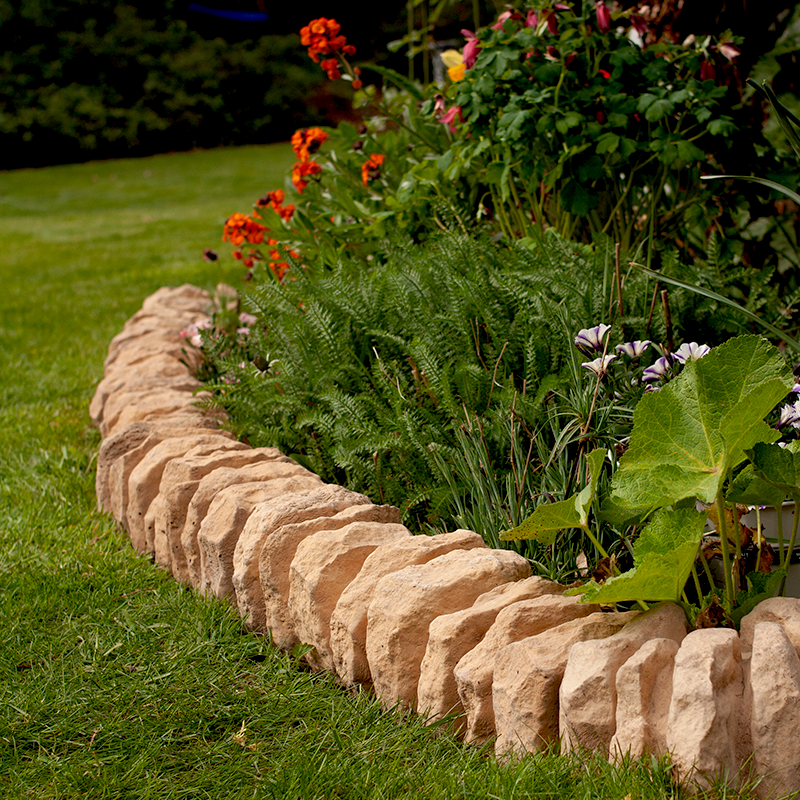
Bricks and Blocks – The "Fanned" Approach: If you prefer the look of natural stone, traditional stone borders, or brick edging, you can still create curves. Instead of laying them end-to-end in a straight line, you'll "fan" them slightly. Lay each brick with a small gap at the back, tapering to a touch at the front where it meets the next brick or stone. This creates a series of small, straight segments that collectively form a smooth curve.
Timber – Steamed or Segmented: For timber edging, consider thinner, flexible boards if you need gentle curves. For tighter bends, you might need to steam the timber to make it pliable, or more commonly, use shorter segments of timber secured together to follow the curve.
Flexible Edging: For tight curves, flexible plastic or metal edging is often the easiest to work with. These materials can be bent into almost any shape and are excellent for a subtle, unobtrusive edge.
Prepare Your Trench Correctly:
- Consistent Depth is Crucial: Just like with straight edging, a consistently dug trench is vital for stability. Aim for a depth that allows your chosen edging material to be partially buried, usually with at least two-thirds below ground for good anchorage.
- Follow Your Marks: Carefully dig your trench along your spray-painted line. Take your time to ensure the curve remains smooth.
The Bedding Layer – A Solid Foundation:
- Sand or Mortar: For most edging materials, a compact bedding layer of sharp sand or a lean mortar mix (e.g., 6 parts sand to 1 part cement) is essential. This provides a level and stable base for your edging. For bricks or heavier materials, mortar offers superior stability, especially on curves where individual units might be under more lateral stress.
- Leveling on a Curve: Use a spirit level along shorter sections of your garden border edging, working along the curve. Don't try to level across the entire curve at once; focus on getting each segment even with its neighbour.
Securing Your Edging:
- Mortar for Bricks/Blocks: If using bricks or blocks on a curved path, mortar between the joints (at the back of the "fan") will provide extra rigidity and prevent shifting over time.\
- Pegs for Flexible Edging: Flexible plastic or metal edging typically comes with specific pegs that you hammer into the ground to hold the curve in place.
While straight edging might seem simpler to line up initially, the process for curved edging simply requires a different approach to planning and material handling. By embracing flexible tools like hosepipes and understanding how to adapt your chosen materials, you'll soon be creating elegant, flowing lines that enhance the natural beauty of your garden.
Ready to start your project?
Ultimately, creating curved garden edging is a rewarding project that adds a touch of bespoke elegance to your outdoor space. It’s a chance to move beyond the conventional and design a garden that flows naturally and feels uniquely your own. With the right tools and a little patience, the results are well worth the effort.
Gardenstone specialises in Decorative Garden Edging for every garden. Here, you’ll find both traditional and modern designs in a range of colours and styles. Our garden edging is the perfect way to add effortless character and charm to your garden borders, paths and patios, allowing you to create aesthetically pleasing designs and geometry around your exterior space’s focal point.